Objective
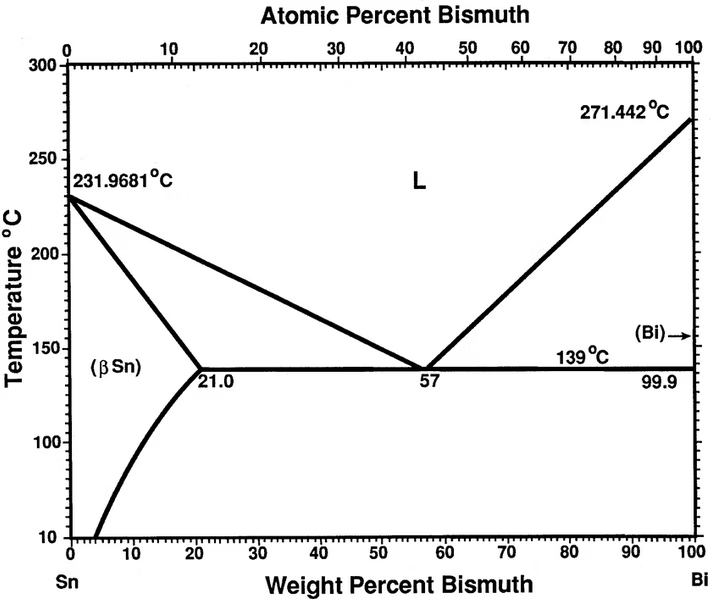
Experimentally analyze phase transitions in a bismuth-tin alloy and compare results with theoretical equilibrium phase diagrams.
Key Contributions
- Conducted fusion and solidification experiments on Bi-Sn alloys.
- Extracted phase transition temperatures from DSC measurements.
- Compared experimental results with theoretical phase diagrams.
Bi-Sn Phase Diagram Study
Objective
Characterize the microstructure of metallic materials through preparation and microscopic analysis.
Key Contributions
- Prepared samples through polishing and chemical etching.
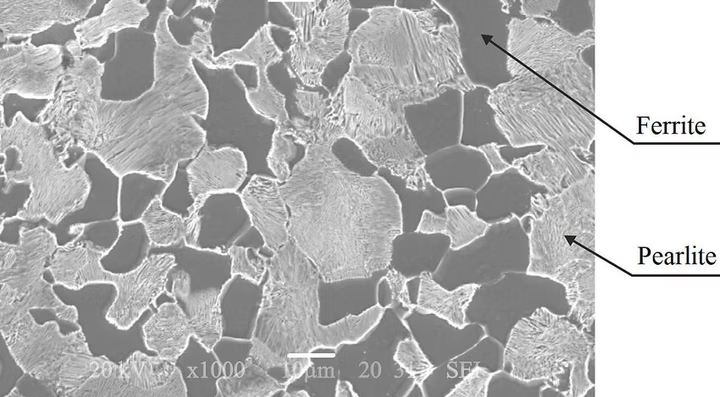
- Observed steel and cast iron microstructures under a microscope.
- Identified key phases such as pearlite, ferrite, and cementite.
Metallographic Examination
Objective
Analyze the mechanical behavior of materials under tensile loading.
Key Contributions
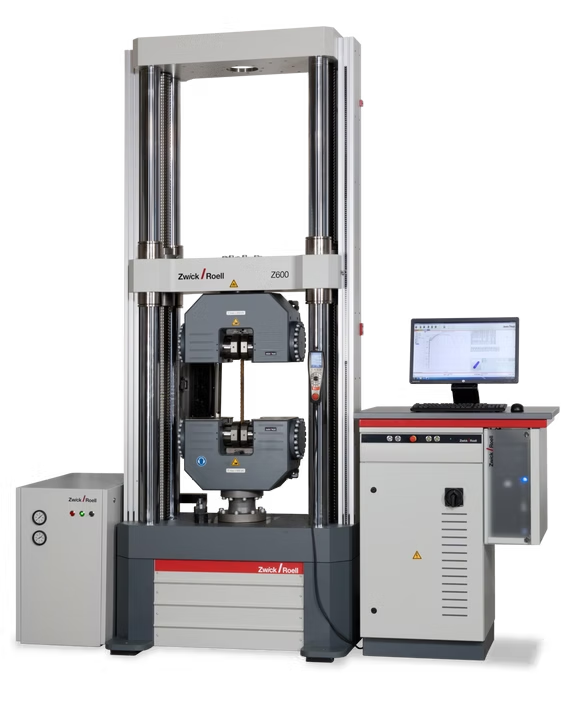
- Performed tensile tests on steel, aluminum, and polyethylene.
- Analyzed stress-strain curves to determine Young's modulus.
- Modeled material behavior using strain-hardening laws.
Tensile Testing of Materials
Objective
Compare theoretical and experimental behavior of structural instability and collapse.
Key Contributions
- Studied Euler buckling in slender beam structures.
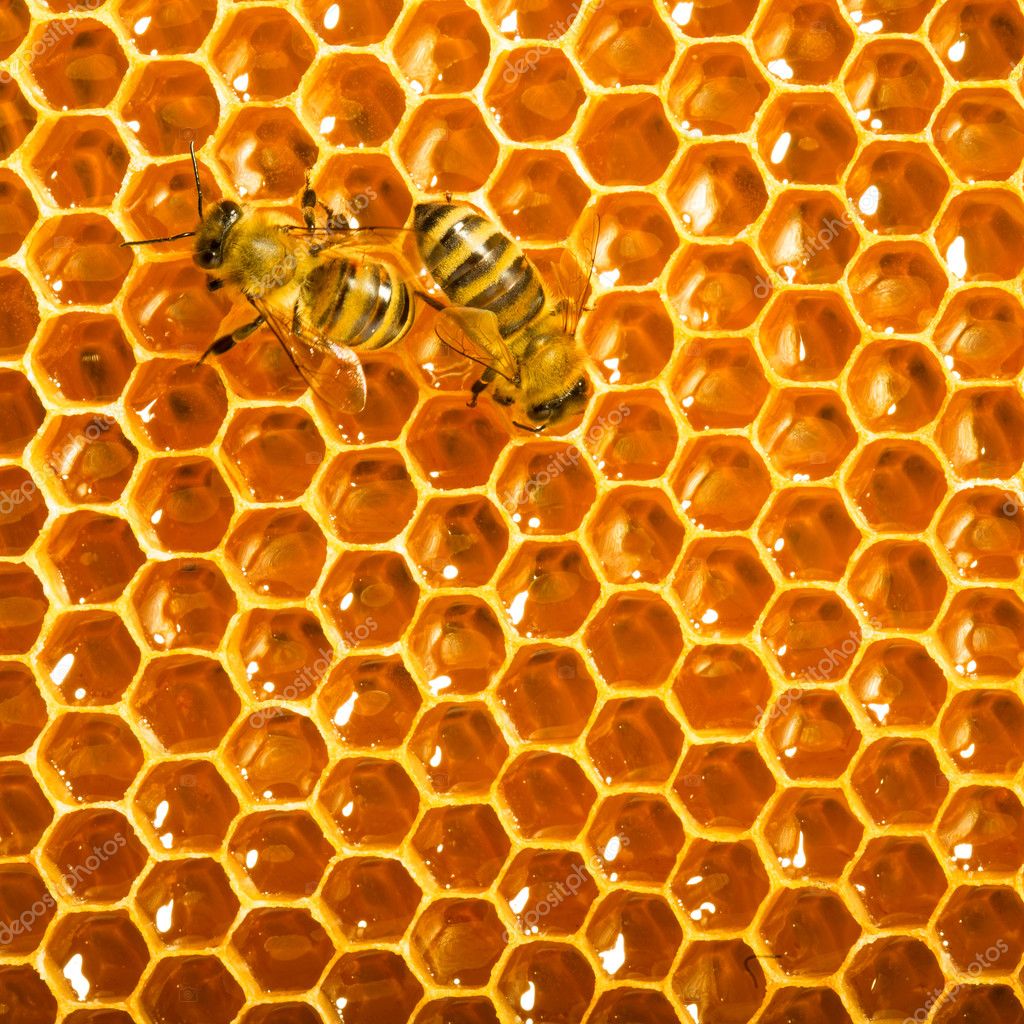
- Analyzed elastic collapse in hexagonal honeycomb materials.
- Evaluated stiffness, failure modes, and geometric influence.
Buckling and Honeycomb Collapse
Objective
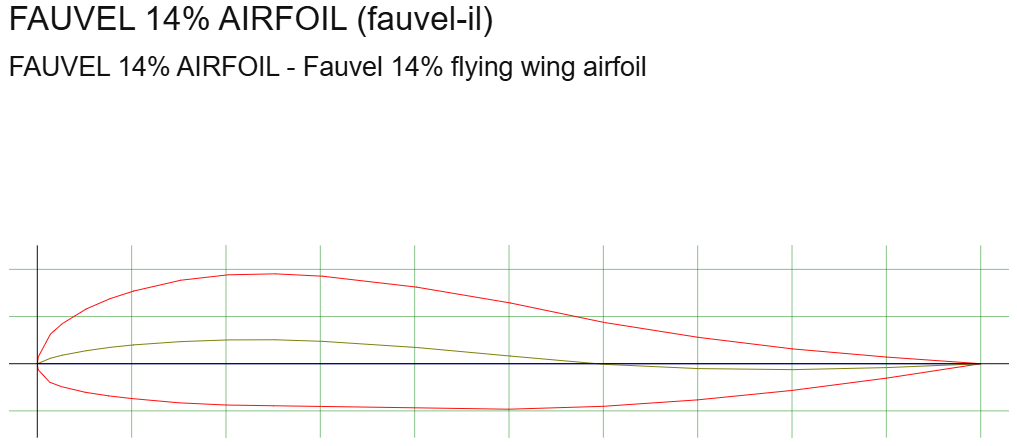
Simulate aerodynamic performance of an airfoil under varying flow conditions.
Key Contributions
- Conducted CFD simulations using Star-CCM+.
- Analyzed lift and drag coefficients across angles of attack.
- Identified stall behavior and performance limitations.
CFD Simulation of Fauvel 14% Airfoil
Objective
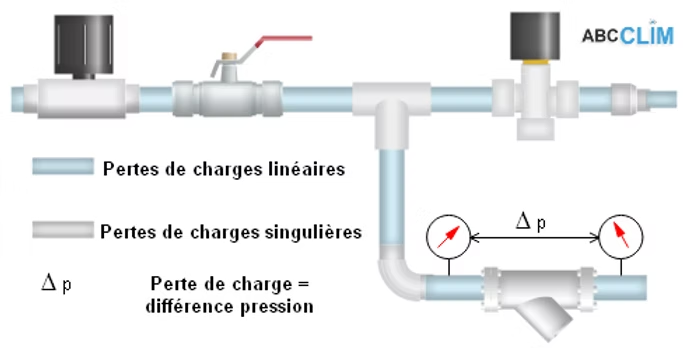
Investigate pressure losses in pipe systems and compare with theoretical models.
Key Contributions
- Measured major and minor losses in various pipe configurations.
- Studied the impact of roughness and diameter on flow behavior.
- Compared results with the Moody diagram and theoretical predictions.
Head Losses in Pipe Flow